


We are told that money will free us.
Instead, women at the top often simply learn to suffer more efficiently. It comes wrapped in pretty language– ambitious, driven, mission-led, sometimes even framed as doing for our grandmothers what they were never allowed to do– but when you peel the curtain back, it is overfunctioning.
And overfunctioning at work remains one of the most culturally rewarded compulsions we have: the quiet agreement that constant output is virtue, that rest is indulgence, that the highest performers are the ones who never stop.
I recently watched Alex Hormozi proudly post about waking at 5 a.m. on the weekend to outwork the limits of “996”—the punishing 9 a.m. to 9 p.m., six-days-a-week schedule common, particularly within tech, in China until it was recently banned. The applause was immediate. It almost always is.
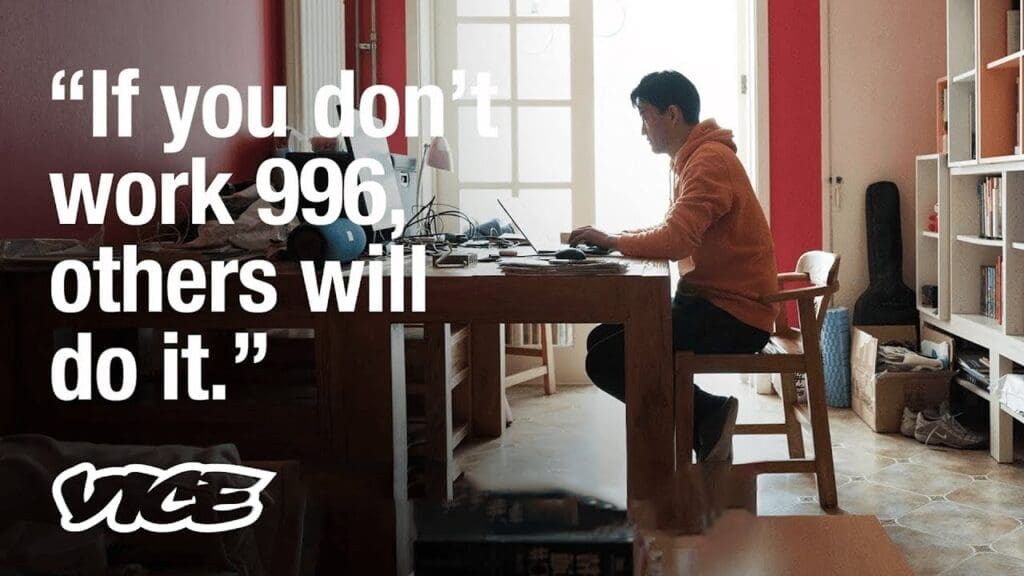
Stepping outside this world is what makes its logic visible. What we celebrate as discipline often looks, upon closer examination, a culturally sanctioned compulsion: the ability to override hunger, fatigue, longing, and presence in the service of productivity and output to the machine of work.
I do not say this with judgment. I lived inside that distortion for a very long time.
In the second year of my business, I saw twenty-four private clients every week.
Twenty-four.
Hour after hour of bodies in virtual rooms. Nervous systems. Stories. Breakthroughs. Tears. Strategies. I did the marketing myself. The onboarding. The support inbox. The scheduling. The content. I didn’t hire operations until I crossed half a million in revenue because I told myself I was “being responsible.” What I was really doing was confusing overfunctioning with sovereignty.
Money was coming in fast.
By the third year, the wins got bigger — and so did the collision points. One of my largest client events of the year fell in May, the same month all three of my children had their end-of-year everything. Concerts. Award ceremonies. Classroom celebrations. It was also the birthday month for both of my sons.
I remember one particular evening with surgical clarity.
My clients were at the spa, wrapped in plush robes, sipping cucumber water. I had carefully orchestrated their afternoon of rest. Then I slipped out, got in my car, and drove home just in time for dinner with my son on his birthday. I kissed his forehead. Lit the candles. Sang the song. Smiled through the dissonance of two lives happening at once.
This is what high-income motherhood looks like when the machine is running at full tilt.
By the fourth year, the business was scaling rapidly—more systems, more content, more reach. And beneath the visible expansion, a quieter shift had begun: I was waking up inside the machine. I built a team. Let go of the long hours. Learned, slowly, how to allow pleasure without fearing collapse. We began serving exponentially more clients in far less time—and that ease, too, had to be learned.
To understand what we are actually dismantling, you have to trace the inheritance: the Puritan work ethic braided into the factory logic of the Industrial Revolution, carried forward into modern ambition as a single, relentless refrain –
You can rest later.
You can breathe later.
You can feel later.
First — produce.
This is the world many high-income women live inside now. Not poverty. Not struggle. Something far stranger and more corrosive:
Abundance without spaciousness.
Money without margin.
Success that still feels tight in the chest.
The Slack notifications during school plays.
The Stripe refresh during family dinners.
The calendar booked six weeks out with no unscheduled Tuesday in sight.
The body running on cortisol while the bank account swells.
We learned how to generate income.
But most women did not learn how to inhabit the feeling of overflow and ease that wealth provides.
And one huge differentiator in my journey was that I learned very early in adulthood how wealth was built– from the boring mutual funds to private real estate, from crypto to precious metals, so in the background of higher and higher income years, my husband and I were also aggressively investing. Compounding. Making choices that didn’t show up on Instagram. Studying markets after the house went still after the kids were in bed. Wiring money into private deals that stretched our nervous systems wide.
And then one day– without fireworks, without ceremony, in the fluorescent lighting of our lawyer’s office as we signed our wealth into a family trust– I blinked and realized something unnerving was true:
I was fully work-optional.
Not someday.
Not one more year.
Now.
There was no audience for this moment. Only the quiet destabilization of realizing that the engine I had been consciously creating for over 15 years no longer required my participation at all.
I expected triumph.
Instead, I have felt unmoored.
We are trained our entire lives to be productive members of society. Good grades. Good college. Good job. But culture does not teach you how to become work-optional, much less how to survive the existential rearrangement that follows.
We are taught how to survive.
Not how to thrive and receive the goodness in a life full of exquisite options.
Time, once regimented into color-blocked urgency, began to behave strangely. It widened. It pooled. There were mornings with nowhere I was required to be. No call to lead. No invisible metronome.
On paper, this sounds like a dream. In practice, nervous systems trained for overfunctioning register ease as a threat.
I go to Pilates most mornings now. Some days I write for hours, planning essays or podcasts to support you. Other days I do almost nothing that could defend itself on a spreadsheet. The scaffolding of my former life has begun to fall away, and in its place is a new, unnerving question:
What do I actually want my days to be filled with?
As I navigate the discomfort in this space that I once prayed for, there are very few people to turn to. Luckily, I have a few friends who have reached the work optional point in their lives, and have leaned on them for advice, a non-judgmental ear, and a sounding board.
I went on a walk last week with a friend who had closed her eight-figure company with her husband the year before. She left the internet entirely. No farewell post. No rebrand. No feeling she needed to explain anything. During the walk she told me she is spending her days making pottery in a pottery studio she had built in her home, and how healing putting her hands in clay has been.
I imagined shelves of pottery. A wheel near the window. Bowls that were not optimized for conversion or growth– just bowls.
She shared how odd it’s been to never need to consider or think of the ROI of her time or an activity she chooses.
I felt the sting as she put language to something I had been feeling, but didn’t even realize was what I had been experiencing precisely.
I recently went to the doctor for a routine checkup. The nurse took my vitals. The doctor asked the usual questions. Then, casually, as doctors do: “How’s work?”
I told her I was closing my company.
She looked up quickly. Her face softened, reflexively compassionate. “I’m so sorry,” she said, as if a death had occurred.
“Oh, nothing bad happened,” I said. “We reached a financial level where I am work optional.”
There was a pause. A flicker of calculation. Then she laughed awkwardly and said something about the world’s tiniest violin.
We moved on to what bloodwork she would order.
But I left that office with a strange certainty settling in my chest: there is no socially acceptable script for a woman who exits labor by choice, who planned and consciously shaped this into being for herself. There is celebration for ambition. Reverence for burnout. Even sympathy for collapse after overfunctioning. But no language for quietly, voluntarily opting out of the narrative structure we have been fed for our lives–
Buy your car to drive to work. Drive to work to pay for your car.
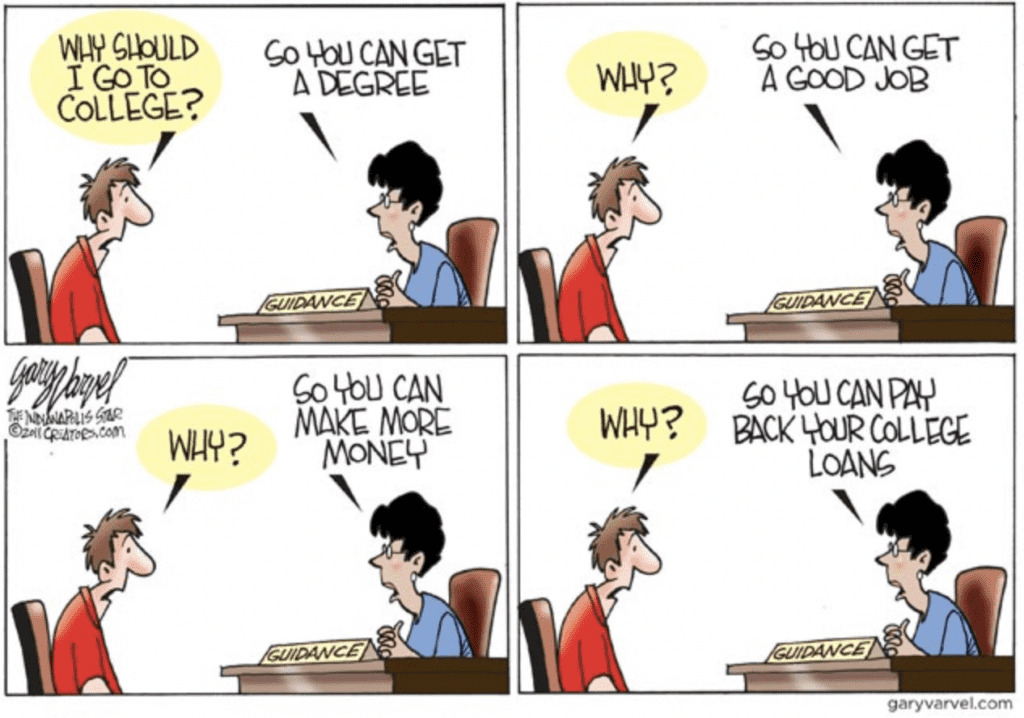
Culture can metabolize almost any story except the quiet decision to not only play by different rules for your life, but to actually decide to build a new game board and play a different game entirely.
When you stop needing to produce, people become nervous. They search your face for the flaw. The hidden cost. The moral catch.
Surely you must be bored. Surely you must be restless. Surely something must be wrong.
Something was wrong.
Just not in the way they expected.
Without the engine of necessity, my identity has begun to loosen in small, unnerving ways. The familiar coordinates disappeared. I no longer knew how to measure a good day. The old metrics– output, sales volume, progress– had been replaced with something viscous and harder to quantify: how mornings feel in my body, how long sunlight lingers across the floor, whether I want to go outside or stay in.
Limitless options, a wide open calendar, the world truly as your oyster, is a very different animal as it turns out.
It does not sharpen itself on urgency.
It does not organize its hunger around payoff.
It drifts. It circles. It refuses to be efficient.
For years I had defined myself in motion. Even when I learned to scale and delegate, even when pleasure entered and became a strong baseline, productivity remained an organizing principle.
Now? Productivity is optional.
And that is where the real excavation begins.
Because even when the calendar clears and the finances no longer argue, the psyche does not immediately stand down. The tie between worth and output is old. Ancient. It lives in the marrow of American culture, its roots spreading all the way back to our Puritan ancestors.
So I find myself these days asking strange, dangerous questions:
Do I want to learn photography?
Do I want to build another company?
Do I want to study the body, become a healer, disappear into some quiet apprenticeship with energy and flesh and breath?
Do I want to do nothing that could ever be justified by a spreadsheet– just Pilates every morning, writing in the afternoons, walking with my kids, reading until my eyes grow soft with it?
And then, almost immediately, I notice the judgment that rises to meet the desire.
A quiet, inherited voice that asks:
Is that useful enough?
Is that serious enough?
Is that respectable enough for a woman with such resources?
For years I have built a brand around desire, pleasure, beauty. I teach women how to want without apology. And yet even I am startled by the edge I now find myself walking: this level of pleasure, this level of beauty, this level of ease.
Yesterday I booked our family an Airbnb that had once been featured in Architectural Digest for a post Christmas vacation.
This morning I came home from an unhurried two-hour massage after Pilates.
Tonight I’ll sit outside with our neighbors, wine on the table, children moving in and out of the dark with the easy choreography of imagination at play, laughter lifting without agenda.
There is nothing scandalous in this on the surface. It is all very quiet. Very human. And yet inside me, something still flinches at the amount of goodness allowed to land in a single day.
Because at the root of it, this is what we all say we want.
Freedom.
Choice.
Time with the people we love.
Beauty without justification.
The right to shape our days according to what feels alive rather than what merely pays.
And yet when the conditions finally exist to live this way without penalty, another question appears– uninvited and unsettling:
How much love, how much joy, how much ease is one person allowed to metabolize before it becomes morally illegible?
We are trained, subtly and relentlessly, to treat these things as if they were finite resources. As if one woman’s abundance must necessarily subtract from another’s. As if ease were an ethical transgression rather than a natural state long deferred.
Money, we are told, is limited.
Time is limited.
Joy is conditional.
Rest must be earned.
And yet we live inside an economic reality that contradicts even its own mythology. Currency is summoned digitally, without ceremony, in quantities too abstract for the body to comprehend. Meanwhile women bargain with themselves over the right to take a nap.
This is the quiet insanity at the heart of it.
I can feel it in my own nervous system as I learn– awkwardly, imperfectly– to receive what my life now offers without rushing to alchemize it into proof of virtue. I am practicing letting beauty take my breath away on a regular basis. Letting pleasure be pleasure. Letting a day be so luxuriously good without needing it to be impressive.
And still, the old reflex stirs:
What will this become?
What might this yield?
Should you be doing something else right now?
Even now, standing in the aftermath of necessity, productivity still tries to masquerade as morality.
And some days I still cannot tell if what I am feeling is freedom or vertigo.
The calendar is open.
The choices are real.
The urgency is gone.
What remains is not clarity yet—only a wide, unguarded silence where a compulsion to work once lived. A silence that does not rush in to reassure me. A silence that does not offer a next rung to climb. Only the quiet fact of my life, unbuffed by necessity, waiting for me to decide what it will mean.
This is the part very few people talk about.
There is no shared script for what this stage is supposed to look like.
The air up here is thin. Rare.
The old maps stop working.
The familiar rules dissolve.
This is the threshold I now recognize as creational sovereignty—the stage beyond survival and beyond entrepreneurial ambition, where creation is no longer tethered to proving, producing, or needing anything to perform a certain way. Where you may work or not work. Build or not build. Create or not create. Where desire and the pull to create, not necessity, becomes the organizing force.
It turns out there is no official paperwork for the life you build after you stop needing the one you spent your whole life building. No certificate. No applause. Just the mildly disorienting privilege of deciding, each day, what your life is actually for.
There is no finish line here.
Only a field of vast possibilities.
It’s funny– we spend our entire lives saying:
Someday I’ll do whatever I want.
And then one day arrives where that sentence is no longer hypothetical– and the question quietly becomes:
Why is this the part no one taught us how to answer?








Read the Comments +